When speaking with news anchor Katie Couric after landing his airliner on the Hudson River, Chesley Sullenberger said, “One way of looking at this might be that for 42 years, I've been making small, regular deposits in this bank of experience, education and training. And on January 15, 2009, the balance was sufficient so that I could make a very large withdrawal.”
The Parable of the 10 Virgins, found in Matt 25:1-13, is a powerful lesson and warning that we must be vigilant with our spiritual preparation too. These two themes fit together. There’s another aviation saying that applies: “Flying is hours of boredom, punctuated by moments of terror.”
Our lives can be looked at the same way. We live our day to day lives making small deposits to our spiritual reserves accompanied by small withdrawals. In this mode, we go on, perhaps for weeks, months and even years. Then, when we’re not expecting it, we face the moment when we must draw on all our experience and spiritual reserves to survive. And by survive I mean our enduring a trial with our faith in God and Jesus Christ intact when we come out the other side.
That we will have such trials is certain. What we do to prepare for them is up to us and if we prepare daily… easily done. The promise of Helaman 5:12 is that by so preparing we will survive.
Showing posts with label Trials. Show all posts
Thursday, May 18, 2017
Sunday, August 7, 2016
What do you want from this?
The "this" referred to the counseling sessions I began last Thursday. My therapist asked the question. I found the answer much harder to give her than I thought it would be. I realized, I have needs I can't define -- I know only that I have them.
In some aspects, my life is a shambles. The details aren't important for this post. Suffice it to say, if what I wanted in life was a course on a map, then I'm way off of it, in uncharted wilderness I don't recognize. In other aspects, I'm more thoroughly grounded in Jesus Christ than I've ever been. He is ever with me, especially now.
I still couldn't answer the question. So she gave me an assignment, to write down my values: what ones define me, what do I aspire to incorporate into my life. After thinking about it for a few days, I came up with a list of twelve which define my values-context: the framework upon which I live.
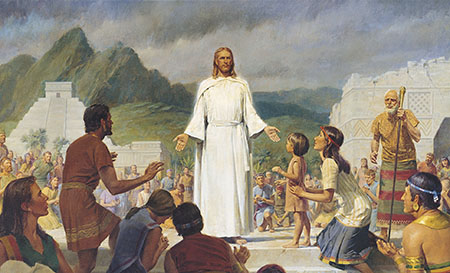
Those values are important to me alone, but my reading of the Savior's visit to the Nephite's is germane to my needs and I suspect to us all. You see, a lesson I've learned from my experiences of these past two years is, to varying degrees, we are all broken. Whether seen by all or hidden deep within our hearts, we all bear burdens of pain and affliction. Each of us needs the Savior's healing touch. The great lesson of His appearance to the Nephites is He healed them all. Not only did He heal them, He also taught them how to live meaningful, joyful, and happy lives.
This is why Jesus Christ is so important: as He did for them, He can do for us.
Thursday, June 30, 2016
Helaman 11-12 - Do I Have Your Attention Yet?
Mormon’s frustration at the wickedness and foolishness of the Nephite people shines in Helaman 11 and 12. The two chapters go together like Siamese twins. Chapter 11 sets the stage for Chapter 12 where Mormon steps completely out of the narrative which is otherwise remarkably transparent. By “transparent,” I mean the author, in this case Mormon, tells the story without any editorializing comments.
With chapter 12, Mormon writes a withering excoriation of human short-sited and selfish behavior. He starts off with, “And thus we can behold how false and also the unsteadiness of the hearts of the children of men…” The chapter is a study in contrasts. On the one hand you have God who’s faithfulness and love is never ending and unchanging. That is contrasted with man who is quick to forget God and be self-absorbed when blessed with great prosperity. For the Nephites, it didn’t take more than a few years before even the righteous were caught up in pride.
This rapid turn from humility to pride drives much of what happens in the Book of Mormon. From God telling Nephi what the Lamanites would be (a scourge to stir them up to repentance) to Mormon’s day where we see this fulfilled. It’s either wars with the Lamanites, famine or natural catastrophes which compel the people to turn to God for help.
It’s such a clear warning to us… for that’s the only reason he included it. He “saw” our day and knew how we’d behave. He’s trying to warn us in the clearest language he can use to not fall into the same trap. For good reason, I fall into it myself and I suspect I’m not alone in that trait. At this point, I consider it a mercy from God when he allows misfortune into our lives as He tries to get our attention so we’ll hear Him ask, “Do I have your attention yet? You’re headed in the wrong direction.” I’d like to get it right… sooner than later.
With chapter 12, Mormon writes a withering excoriation of human short-sited and selfish behavior. He starts off with, “And thus we can behold how false and also the unsteadiness of the hearts of the children of men…” The chapter is a study in contrasts. On the one hand you have God who’s faithfulness and love is never ending and unchanging. That is contrasted with man who is quick to forget God and be self-absorbed when blessed with great prosperity. For the Nephites, it didn’t take more than a few years before even the righteous were caught up in pride.
This rapid turn from humility to pride drives much of what happens in the Book of Mormon. From God telling Nephi what the Lamanites would be (a scourge to stir them up to repentance) to Mormon’s day where we see this fulfilled. It’s either wars with the Lamanites, famine or natural catastrophes which compel the people to turn to God for help.
It’s such a clear warning to us… for that’s the only reason he included it. He “saw” our day and knew how we’d behave. He’s trying to warn us in the clearest language he can use to not fall into the same trap. For good reason, I fall into it myself and I suspect I’m not alone in that trait. At this point, I consider it a mercy from God when he allows misfortune into our lives as He tries to get our attention so we’ll hear Him ask, “Do I have your attention yet? You’re headed in the wrong direction.” I’d like to get it right… sooner than later.
Thursday, June 23, 2016
Helaman 8 - If He did it then, why not now?
Appalled by the people’s wickedness after his return from a mission to the northern lands, Nephi, son of Helaman II prays on his garden tower. More a lament than a prayer, it attracts a lot of attention. Soon a crowd of people is listening which gives him an opening to begin preaching to them. While I won’t go into the story’s details, a device he uses to persuade the people to believe him struck me. I want to talk about it.
In Helaman chapter eight, he recounts the prophecies of the destruction of Jerusalem and compares them with his own. He knew unless they repented, a similar fate awaited them. He uses argument, if God warns people and then follows through on that warning in once instance, why do you think He can’t do it in another?
Likening this passage to my own life and time, I come up with this observation: if God promised to help you in the past and He did, why do you think He won’t help you again according to those same promises? There is substance to the expression, “God is the same yesterday, today, and tomorrow.”
As I face my dragons, my personal Gethsemane’s and all the other trials that come with living in mortality, I need to remember in whom I have trusted. God hasn’t changed. He is ever ready to help as promised. But just as Nephi, Lehi’s son, had trials and challenges as he sought to do God’s will, I will too. The promises were never that life would be easy only that it wouldn’t overcome us. With this assurance we can face them without fear.
That’s a great blessing.
In Helaman chapter eight, he recounts the prophecies of the destruction of Jerusalem and compares them with his own. He knew unless they repented, a similar fate awaited them. He uses argument, if God warns people and then follows through on that warning in once instance, why do you think He can’t do it in another?
Likening this passage to my own life and time, I come up with this observation: if God promised to help you in the past and He did, why do you think He won’t help you again according to those same promises? There is substance to the expression, “God is the same yesterday, today, and tomorrow.”
As I face my dragons, my personal Gethsemane’s and all the other trials that come with living in mortality, I need to remember in whom I have trusted. God hasn’t changed. He is ever ready to help as promised. But just as Nephi, Lehi’s son, had trials and challenges as he sought to do God’s will, I will too. The promises were never that life would be easy only that it wouldn’t overcome us. With this assurance we can face them without fear.
That’s a great blessing.
Thursday, June 9, 2016
Helaman 5 - The Rock Revisited
There are perhaps three passages in the Book of Mormon which stand above all the rest. First among them is Moroni 10:4-5. Right after it is Helaman 5:12 and the third of the top-three is Alma 37:37.
I’ve written about Helaman 5:12 before, but there is so much that can be said of it, I’m visiting it again. In my previous comment on this verse, I talked of what the foundation is (pleasing God before all others). There’s another way to look at this beautiful scripture: the grace and strength of mind, which Christ gives to all who ask it of Him, will swallow any pain. By swallow, I don’t mean it will take it away so you don’t feel any. A pain free life was never on God’s agenda for us: not even the one perfect being, Jesus Christ, lived idyllic nor pain-free.
No, by “swallow” I mean you are strengthened so it won’t destroy you. You can absorb the blow and still stand. Instead it will teach you compassion for the pain others feel. It will show you the pain Christ willingly endured for you and thereby draw you closer to Him than any other experience can. You will know despite all the things you’ve thought and done which you hope to hide from others, He already knows — and He loves you anyway.
The image is an accurate showing for it's the rock on which the light house stands which bears the brunt of the waves. In our lives, that Rock is the Savior.
In this state of mind, all the fiery darts, all the mighty shafts, the hail, the winds, and the waves will still leave their marks. You will feel it all deeply. But, you will have an inner place, an inner peace where these things can’t get. A place where you’ll see the Son of Man did descend below all things — for you. Though hell rages around you, you will feel safe and loved. And in this state, you will know with certainty, nothing can destroy you.
Such is the promise of Helaman 5:12.
I’ve written about Helaman 5:12 before, but there is so much that can be said of it, I’m visiting it again. In my previous comment on this verse, I talked of what the foundation is (pleasing God before all others). There’s another way to look at this beautiful scripture: the grace and strength of mind, which Christ gives to all who ask it of Him, will swallow any pain. By swallow, I don’t mean it will take it away so you don’t feel any. A pain free life was never on God’s agenda for us: not even the one perfect being, Jesus Christ, lived idyllic nor pain-free.
No, by “swallow” I mean you are strengthened so it won’t destroy you. You can absorb the blow and still stand. Instead it will teach you compassion for the pain others feel. It will show you the pain Christ willingly endured for you and thereby draw you closer to Him than any other experience can. You will know despite all the things you’ve thought and done which you hope to hide from others, He already knows — and He loves you anyway.
The image is an accurate showing for it's the rock on which the light house stands which bears the brunt of the waves. In our lives, that Rock is the Savior.
In this state of mind, all the fiery darts, all the mighty shafts, the hail, the winds, and the waves will still leave their marks. You will feel it all deeply. But, you will have an inner place, an inner peace where these things can’t get. A place where you’ll see the Son of Man did descend below all things — for you. Though hell rages around you, you will feel safe and loved. And in this state, you will know with certainty, nothing can destroy you.
Such is the promise of Helaman 5:12.
Friday, March 11, 2016
Mosiah 21-22 - The People of Limhi
After Noah’s death, the people choose one of his sons, Limhi, to be their king. Then true to the prophecy given by Abinadi, the Lamanites subjugate them. Thus begins a decades long period of chastening by the Lord to bring them back to Him. More on this in a moment.
I just have to wonder. Don’t you think a society brought to ruin by a king would not want any of his descendants to be their new king? I wouldn’t. Joseph Smith nor any American in the 1820’s wouldn't either. Yet the event is recorded as if it’s the perfectly normal thing to do. Hearkening back to what Orson Scott Card said, if an author feels something needs to be explained, he will make a point to do it in the narrative. Mormon does that with the monetary system: it was unusual to him. But handing a kingdom, by the voice of the people no less, from father to son is no big deal. It’s another piece of evidence showing an American living in 1820 did not write this. Someone used to kingly succession amongst an aristocratic class did.
The other thing of note is the evolution of the people through this time. They accept bondage and appoint their own king, Limhi. Then the Lamanites attack them because of the abduction of 24 of their daughters. The Nephites are spared because they capture the Lamanite king and persuade him it wasn’t them. They live in peace but chafe under the tax burden and treatment by the Lamanites. Imagine what it would be like to have “just” a 50% tax burden. It’s bondage to the Nephites, but democracy to us. Go figure.
They try three times to fight their way out, to win their freedom by the sword. They fail and humble themselves to the dust. For a time the Lamanites treat them little better than beasts of burden. They also learn charity by caring for the widows of the dead soldiers. By slow degrees Heavenly Father starts to bless them with ever more abundant crops. Finally, when they are as desirous to be baptized as the people of Alma were, Ammon is led to them and they make their escape.
The community they establish, the Land of Gideon, becomes one of the stalwart cities among the Nephites for generations.
I just have to wonder. Don’t you think a society brought to ruin by a king would not want any of his descendants to be their new king? I wouldn’t. Joseph Smith nor any American in the 1820’s wouldn't either. Yet the event is recorded as if it’s the perfectly normal thing to do. Hearkening back to what Orson Scott Card said, if an author feels something needs to be explained, he will make a point to do it in the narrative. Mormon does that with the monetary system: it was unusual to him. But handing a kingdom, by the voice of the people no less, from father to son is no big deal. It’s another piece of evidence showing an American living in 1820 did not write this. Someone used to kingly succession amongst an aristocratic class did.
The other thing of note is the evolution of the people through this time. They accept bondage and appoint their own king, Limhi. Then the Lamanites attack them because of the abduction of 24 of their daughters. The Nephites are spared because they capture the Lamanite king and persuade him it wasn’t them. They live in peace but chafe under the tax burden and treatment by the Lamanites. Imagine what it would be like to have “just” a 50% tax burden. It’s bondage to the Nephites, but democracy to us. Go figure.
They try three times to fight their way out, to win their freedom by the sword. They fail and humble themselves to the dust. For a time the Lamanites treat them little better than beasts of burden. They also learn charity by caring for the widows of the dead soldiers. By slow degrees Heavenly Father starts to bless them with ever more abundant crops. Finally, when they are as desirous to be baptized as the people of Alma were, Ammon is led to them and they make their escape.
The community they establish, the Land of Gideon, becomes one of the stalwart cities among the Nephites for generations.
Labels:
Ammon,
bondage,
chastening,
Culture,
Kings,
Limhi,
Noah,
Orson Scott Card,
Trials
Sunday, January 10, 2016
2 Nephi 19-23 - The Lesson Continues
In these chapters Isaiah hammers home the point that we need to trust God, to have faith in Him rather than in the wisdom of men and our pride. There is too much going on in these chapters to review them in any comprehensive way. Doing so requires books worth of ink and paper and a lifetime of pondering.
There’s a lot about the last days here. There’s the destruction of “Babylon” which is a type of the wicked and oppressive governments that exist in our day. There’s also mention of the purging wars waged by the wicked which hearken to Jacob 5’s references of the pruning of the orchard to clear out the evil branches to make room for the righteous. Revelations references to the dragon making war against the woman and the great destructions caused by the evil beasts also speak to this.
In the end, God delivers His people and they experience great peace.
On a personal level, which for me is where all this matters, is the lesson that all will go through adversity and faith challenging trials. The righteous will humble themselves and turn to God. Then, in the midst of great adversity, they will experience a peace which will cary them through these times. The wicked will turn to their own wisdom and suffer a different fate.
There repeats a series of punishments which end with the warning, “for this his hand is stretched out still.” I used to think this meant that despite these punishments, God’s hand of mercy was still extended if the people would repent. I can see how this is a correct interpretation. But I’ve also come to believe this interpretation, that despite all He’s done to get them to repent, He’s prepared to smite them again because they won’t.
The bottom line: everyone is going to experience trials. The great question is: how will we handle it? Will we take faith, turn to God for help and in the end enjoy great peace? Or will we ignore God and follow our own reason to spiritual death and destruction?
There’s a lot about the last days here. There’s the destruction of “Babylon” which is a type of the wicked and oppressive governments that exist in our day. There’s also mention of the purging wars waged by the wicked which hearken to Jacob 5’s references of the pruning of the orchard to clear out the evil branches to make room for the righteous. Revelations references to the dragon making war against the woman and the great destructions caused by the evil beasts also speak to this.
In the end, God delivers His people and they experience great peace.
On a personal level, which for me is where all this matters, is the lesson that all will go through adversity and faith challenging trials. The righteous will humble themselves and turn to God. Then, in the midst of great adversity, they will experience a peace which will cary them through these times. The wicked will turn to their own wisdom and suffer a different fate.
There repeats a series of punishments which end with the warning, “for this his hand is stretched out still.” I used to think this meant that despite these punishments, God’s hand of mercy was still extended if the people would repent. I can see how this is a correct interpretation. But I’ve also come to believe this interpretation, that despite all He’s done to get them to repent, He’s prepared to smite them again because they won’t.
The bottom line: everyone is going to experience trials. The great question is: how will we handle it? Will we take faith, turn to God for help and in the end enjoy great peace? Or will we ignore God and follow our own reason to spiritual death and destruction?
Tuesday, January 5, 2016
2 Nephi 17-18 - Trust God
If you ever face a trial or adversity that seems certain to overwhelm and destroy you, then you’ll want to remember the lesson of 2 Nephi 17 and 18. Syria and Ephriam, the Northern Kingdom, combined forces to attack Judah, the Southern Kingdom. Ahaz was the king of Judah at the time. Egypt was the other super-power of the day. Under the conditions, Ahaz felt a lot of pressure to ally with Egypt to protect the country from the pending war with Syria.
Acting on inspiration from God, Isaiah went to Ahaz and said, in effect, don’t worry about them, they won’t hurt you. They have problems of their own and are no real threat to Judah.
Then God inspired Isaiah to offer Ahaz a sign that this would be. I don’t know that much about him, but to his credit he demurred, saying, “I will not ask nor tempt the Lord.” So, instead He offers a sign, the birth of the Messiah.
I thought, how odd, that the sign of proof that these two nations were no threat, is a future event. So why bother? Then it occurred, Isaiah wasn’t writing this for Ahaz, but for us.
He then warns that allying with Egypt would lead to ruin.
The lesson for us… We will in this life face difficult trials and times of such adversity, we’re certain we’ll be overwhelmed by them. But as Isaiah says in 2 Nephi 18:14, let the Lord be your fear… turn to Him for help. As proof that things will work out, consider the Savior’s birth and life, the offered sign of God’s mercy and love for you.
Don’t turn to Egypt, the “thinking man’s” rational thing to do for that will only lead to ruin. Turn to God instead and have faith. That has been, is, and always will be the only safe way through the trials of this life.
Acting on inspiration from God, Isaiah went to Ahaz and said, in effect, don’t worry about them, they won’t hurt you. They have problems of their own and are no real threat to Judah.
Then God inspired Isaiah to offer Ahaz a sign that this would be. I don’t know that much about him, but to his credit he demurred, saying, “I will not ask nor tempt the Lord.” So, instead He offers a sign, the birth of the Messiah.
I thought, how odd, that the sign of proof that these two nations were no threat, is a future event. So why bother? Then it occurred, Isaiah wasn’t writing this for Ahaz, but for us.
He then warns that allying with Egypt would lead to ruin.
The lesson for us… We will in this life face difficult trials and times of such adversity, we’re certain we’ll be overwhelmed by them. But as Isaiah says in 2 Nephi 18:14, let the Lord be your fear… turn to Him for help. As proof that things will work out, consider the Savior’s birth and life, the offered sign of God’s mercy and love for you.
Don’t turn to Egypt, the “thinking man’s” rational thing to do for that will only lead to ruin. Turn to God instead and have faith. That has been, is, and always will be the only safe way through the trials of this life.
Monday, December 7, 2015
2 Nephi 2 - Opposition and Agency
For many, the highlight of 2 Nephi Chapter 2 is Lehi’s discourse on opposition. It is an important concept to understand, but for me, the heart of the chapter is verse 27 which talks about agency.
Lehi teaches because of the two polar forces in the universe, with God and Jesus on one side and Satan on the other, man is left in a position to chose for himself who he’ll choose to be like. God set it up that way.
I’ve often wondered why there is opposition and what need there is for Satan and his temptations. It’s not until I realized we learn more about who we are from our failures than we do from our successes, that it all made sense to me. This life is a test of our character. But it’s not God who needs to know, it’s us. Since we learn more from our failures, God in His wisdom placed us in an environment where that would happen a lot.
That’s how a loving God can subject His beloved children to misery, pain, and failure. He knows we will learn more about ourselves this way. He knows we are more malleable in the heat of affliction than we are when things are going well. And as imperfect beings, we need the refining.
In other words, it’s an act of faith and love on His part in our behalf. Some might say tough love, and perhaps it is. He did stand close by the Savior in the darkest hours of Gethsemane and Golgotha, doing what He knew was best for all of His children, including His perfect Son. Having seen my children go through pain and difficulties, I’m certain Heavenly Father felt vicariously the pain His Son endured. As well as He feels ours. He was close to Him and He is close to us. In all the trials I’ve been in, I’ve found Him quick to answer prayers and all His answers while not what I’ve wanted, have always been, on reflection, what I needed.
I think of Laman when he complained about building a boat and Nephi’s answer that if God had wanted, He could have caused them to walk to the Promised Land. If He’d granted Laman’s request, that’s what they would have done. Can you imagine walking from Bountiful to America? A boat was the best way to get there. God knew that. Laman didn’t. Because of God’s love for him He insisted on building a boat.
The moral of the story is it’s in our best interest to build the boat when we think we’d rather walk.
Lehi teaches because of the two polar forces in the universe, with God and Jesus on one side and Satan on the other, man is left in a position to chose for himself who he’ll choose to be like. God set it up that way.
I’ve often wondered why there is opposition and what need there is for Satan and his temptations. It’s not until I realized we learn more about who we are from our failures than we do from our successes, that it all made sense to me. This life is a test of our character. But it’s not God who needs to know, it’s us. Since we learn more from our failures, God in His wisdom placed us in an environment where that would happen a lot.
That’s how a loving God can subject His beloved children to misery, pain, and failure. He knows we will learn more about ourselves this way. He knows we are more malleable in the heat of affliction than we are when things are going well. And as imperfect beings, we need the refining.
In other words, it’s an act of faith and love on His part in our behalf. Some might say tough love, and perhaps it is. He did stand close by the Savior in the darkest hours of Gethsemane and Golgotha, doing what He knew was best for all of His children, including His perfect Son. Having seen my children go through pain and difficulties, I’m certain Heavenly Father felt vicariously the pain His Son endured. As well as He feels ours. He was close to Him and He is close to us. In all the trials I’ve been in, I’ve found Him quick to answer prayers and all His answers while not what I’ve wanted, have always been, on reflection, what I needed.
I think of Laman when he complained about building a boat and Nephi’s answer that if God had wanted, He could have caused them to walk to the Promised Land. If He’d granted Laman’s request, that’s what they would have done. Can you imagine walking from Bountiful to America? A boat was the best way to get there. God knew that. Laman didn’t. Because of God’s love for him He insisted on building a boat.
The moral of the story is it’s in our best interest to build the boat when we think we’d rather walk.
Tuesday, July 28, 2015
3 Nephi 6 - Our Day
In the keynote address of the April 1987 General Conference, President Benson said, "The record of the Nephite history just prior to the Savior's visit reveals many parallels to our own day." This chapter is the meat of that statement. As such it contains material that is cause for great concern with just a dash of hope.
The hope comes from showing what we must to do to remain faithful in such a wicked environment. In verse 13, he observes only charity: not returning railing for railing, being kind in the face of persecution is the only way the righteous remained so.
The rest of the chapter tells of wickedness being so prevalent and Satan's power over the people so great, the church is broken up. Eventually, it exists only among a few of the Lamanites. Later, when God wants to warn the people, He must choose righteous men since the church no longer has an effective voice.
We live in such days: we have many businesses, lawyers and a level of material wealth the world has not seen. Wickedness abounds and as Isaiah wrote, today that which God says is good is now considered evil. Debauchery and lasciviousness is considered acceptable entertainment. (50 Shades of Gray, anyone?)
Our government is disconnected from reality... many of us are. In my previous post, I commented on Giddianhi's letter. It's an outrageous declaration of beliefs not grounded in reality or sound thinking. But how different is it from what comes out of Washington DC?
The only safe path forward, is courageous, yet humble and committed adherence to Jesus Christ and His teachings.
The hope comes from showing what we must to do to remain faithful in such a wicked environment. In verse 13, he observes only charity: not returning railing for railing, being kind in the face of persecution is the only way the righteous remained so.
The rest of the chapter tells of wickedness being so prevalent and Satan's power over the people so great, the church is broken up. Eventually, it exists only among a few of the Lamanites. Later, when God wants to warn the people, He must choose righteous men since the church no longer has an effective voice.
We live in such days: we have many businesses, lawyers and a level of material wealth the world has not seen. Wickedness abounds and as Isaiah wrote, today that which God says is good is now considered evil. Debauchery and lasciviousness is considered acceptable entertainment. (50 Shades of Gray, anyone?)
Our government is disconnected from reality... many of us are. In my previous post, I commented on Giddianhi's letter. It's an outrageous declaration of beliefs not grounded in reality or sound thinking. But how different is it from what comes out of Washington DC?
The only safe path forward, is courageous, yet humble and committed adherence to Jesus Christ and His teachings.
Thursday, July 23, 2015
Helaman 16 - 3 Nephi 1 - The Futility of Signs
If you think signs will make lasting converts, think again. If you doubt my words, these two chapters are all the proof I need. Many stories in the Book of Mormon show they never cause nor precede conversion, rather, they either condemn or follow faith. The sign of the birth of Jesus Christ is not only the archetype of all signs but the most impressive too.
Leading up to it, the grossly wicked Nephites had whipped up the wicked ones to anger against the righteous for their belief in the Savior's coming. This anger was so hot, they'd determined to massacre the righteous on a given day if it didn't appear. Nephi, the son of Nephi was so distraught he spent the day before praying mightily for his people. My guess is, he'd actually spent many days leading up to that pleading for the welfare of the righteous.
That he would do so, is evidence he was confident the government would not intervene. In fact, the government probably sanctioned what was about to happen. So, if you think being righteous is difficult today, imagine what it was like then. For them, their faith in everything they'd been taught, not to mention their lives was on the line. But I digress.
That day Nephi gets an answer, "tonight the sign will be given." And sure enough, it comes astonishing everyone. Many of the wicked fall to the ground in wonder. And for what you think would be an unforgettable night, there is no darkness.
Everyone is converted to the Gospel. But the next day it seems, the lies and rumors began. "It's all some trick to deceive us," they are told. And while it seems preposterous to us, in less than three years, many among both the Nephites and the Lamanites are dissenting and joining the Gadiantons. The chapter ends with even the Lamanites dwindling in righteousness because of the wickedness of their children.
In my opinion, this sign wasn't given to convert the wicked, but to save the righteous. And so it is today: your personal experiences with the spirit wont convert others, but they can save your testimony in the face of trials and persecution. And that's why we need to work to have them often. Enjoy the day.
In the spirit of the post, let me make a plug for my app. "LDS Advocate" links to many online resources which can help strengthen your testimony. I wrote it for the faithful who have questions about aspects of the Gospel. Please check it out in iTunes. There's a link to it in the sidebar of this blog. Thanks.
Leading up to it, the grossly wicked Nephites had whipped up the wicked ones to anger against the righteous for their belief in the Savior's coming. This anger was so hot, they'd determined to massacre the righteous on a given day if it didn't appear. Nephi, the son of Nephi was so distraught he spent the day before praying mightily for his people. My guess is, he'd actually spent many days leading up to that pleading for the welfare of the righteous.
That he would do so, is evidence he was confident the government would not intervene. In fact, the government probably sanctioned what was about to happen. So, if you think being righteous is difficult today, imagine what it was like then. For them, their faith in everything they'd been taught, not to mention their lives was on the line. But I digress.
That day Nephi gets an answer, "tonight the sign will be given." And sure enough, it comes astonishing everyone. Many of the wicked fall to the ground in wonder. And for what you think would be an unforgettable night, there is no darkness.
Everyone is converted to the Gospel. But the next day it seems, the lies and rumors began. "It's all some trick to deceive us," they are told. And while it seems preposterous to us, in less than three years, many among both the Nephites and the Lamanites are dissenting and joining the Gadiantons. The chapter ends with even the Lamanites dwindling in righteousness because of the wickedness of their children.
In my opinion, this sign wasn't given to convert the wicked, but to save the righteous. And so it is today: your personal experiences with the spirit wont convert others, but they can save your testimony in the face of trials and persecution. And that's why we need to work to have them often. Enjoy the day.
In the spirit of the post, let me make a plug for my app. "LDS Advocate" links to many online resources which can help strengthen your testimony. I wrote it for the faithful who have questions about aspects of the Gospel. Please check it out in iTunes. There's a link to it in the sidebar of this blog. Thanks.
Thursday, July 9, 2015
Helaman 5 - the Rock
Helaman 5 is one of those chapters in the Book of Mormon that if you could only have a few, this is one you’d want above many others. There’s so much here, I can’t cover it all in a single day, so today I just write about v12 and what leads up to it. Tomorrow, I’ll write about the rest.
Helaman 5:12 is the entire message of the Book of Mormon distilled into a single paragraph. I can’t say it any better, so here it is:
And now, my sons, remember, remember that it is upon the rock of our Redeemer, who is Christ, the Son of God, that ye must build your foundation; that when the devil shall send forth his mighty winds, yea, his shafts in the whirlwind, yea, when all his hail and his mighty storm shall beat upon you, it shall have no power over you to drag you down to the gulf of misery and endless wo, because of the rock upon which ye are built, which is a sure foundation, a foundation whereon if men build they cannot fall.
I’ve often wondered what the foundation is Helaman is referring to. As near as I can tell, it means your faith in Christ: living with the confidence that He knows you, loves you and leads you along this bumpy road called "life," and that you can entrust your life to Him.
My best part is the promise that if we live this way, then we will never fall, as in fall away from Him and His light into darkness and misery.
I cling to that.
Helaman 5:12 is the entire message of the Book of Mormon distilled into a single paragraph. I can’t say it any better, so here it is:
And now, my sons, remember, remember that it is upon the rock of our Redeemer, who is Christ, the Son of God, that ye must build your foundation; that when the devil shall send forth his mighty winds, yea, his shafts in the whirlwind, yea, when all his hail and his mighty storm shall beat upon you, it shall have no power over you to drag you down to the gulf of misery and endless wo, because of the rock upon which ye are built, which is a sure foundation, a foundation whereon if men build they cannot fall.
I’ve often wondered what the foundation is Helaman is referring to. As near as I can tell, it means your faith in Christ: living with the confidence that He knows you, loves you and leads you along this bumpy road called "life," and that you can entrust your life to Him.
My best part is the promise that if we live this way, then we will never fall, as in fall away from Him and His light into darkness and misery.
I cling to that.
Subscribe to:
Comments (Atom)